
ACL Reconstruction
ACL Reconstruction in Palwal
Restoring Knee Stability After an ACL Injury
An ACL tear can cause the knee to feel unstable, particularly during running, pivoting, changing direction, or participating in sports. For some patients, the injury can also be associated with meniscus or cartilage damage.
ACL reconstruction is a surgical procedure used to restore stability in selected patients with an ACL-deficient knee.
Dr. Amit Kumar Sharma, Senior Consultant Orthopedic Surgeon at Apex Hospital, Palwal, Haryana, provides evaluation and treatment for ACL injuries and other sports-related knee conditions.
Treatment is individualized based on knee stability, the nature of the injury, activity level, associated injuries, overall health, and recovery goals.

What is an ACL Tear?
The anterior cruciate ligament (ACL) is one of the major stabilizing ligaments inside the knee.
It helps control:
- Forward movement of the shin bone
- Rotational stability
- Knee control during pivoting and changes in direction
An ACL tear may be partial or complete and can occur when the knee is subjected to a sudden twisting or forceful movement.
Common causes include:
- Sudden change in direction
- Pivoting during sports
- Landing awkwardly after a jump
- Sudden stopping or deceleration
- Direct trauma to the knee
- Road traffic or other traumatic injuries
An ACL injury does not automatically mean that surgery is required. The appropriate treatment depends on the individual injury and the patient’s functional requirements.
Symptoms of an ACL Injury
An ACL tear may produce symptoms such as:
- A popping sensation at the time of injury
- Sudden knee pain
- Swelling developing soon after the injury
- Difficulty putting weight on the leg
- Reduced range of motion
- Knee instability
- A feeling that the knee may give way
- Difficulty running, pivoting, or changing direction
Some patients may experience persistent instability after the initial pain and swelling settle.
This instability is an important factor when deciding whether further treatment, including reconstruction, may be appropriate.
How is an ACL Tear Diagnosed?
Diagnosis usually involves a combination of clinical assessment and appropriate imaging.
Medical History
The mechanism of injury, symptoms, activity level, previous knee problems, and functional limitations are discussed.
Physical Examination
The knee is examined for:
- Instability
- Range of motion
- Swelling
- Tenderness
- Associated signs of meniscus or other structural injury
Specific clinical tests may be used to assess ACL stability.
Imaging
X-rays may be used to evaluate the bones and identify associated injuries.
MRI can provide information about the ACL and other soft-tissue structures, including the meniscus, cartilage, and additional ligaments.
Imaging findings should be interpreted alongside the clinical examination rather than being considered in isolation.
Does Every ACL Tear Require Surgery?
No.
Not every ACL tear requires reconstruction.
Some patients may function well with non-surgical treatment, particularly when the knee remains stable during their normal activities and their activity requirements do not involve frequent pivoting or high-demand sports.
Non-surgical treatment may include:
- Physiotherapy
- Muscle strengthening
- Neuromuscular training
- Activity modification
- Gradual return to activity
- Management of pain and swelling
ACL reconstruction may be considered when instability persists, the patient wants to return to activities involving pivoting or cutting, associated injuries are present, or other clinical factors make surgery appropriate.
The decision should be individualized rather than based solely on the MRI finding of an ACL tear.
When is ACL Reconstruction Recommended?
ACL reconstruction may be considered in selected patients with:
- Persistent knee instability
- Recurrent giving-way episodes
- Difficulty participating in desired activities
- High-demand sports requirements
- Combined ACL and meniscus injuries
- Associated ligament injuries
- Certain injuries where knee stability cannot be adequately restored through rehabilitation
- Age and activity level
- Type and extent of ACL injury
- Knee stability
- Associated meniscus or cartilage injuries
- Occupational requirements
- Sporting goals
- Previous treatment
- Overall health
- Patient expectations
A detailed assessment helps determine whether reconstruction is appropriate.
What is ACL Reconstruction?
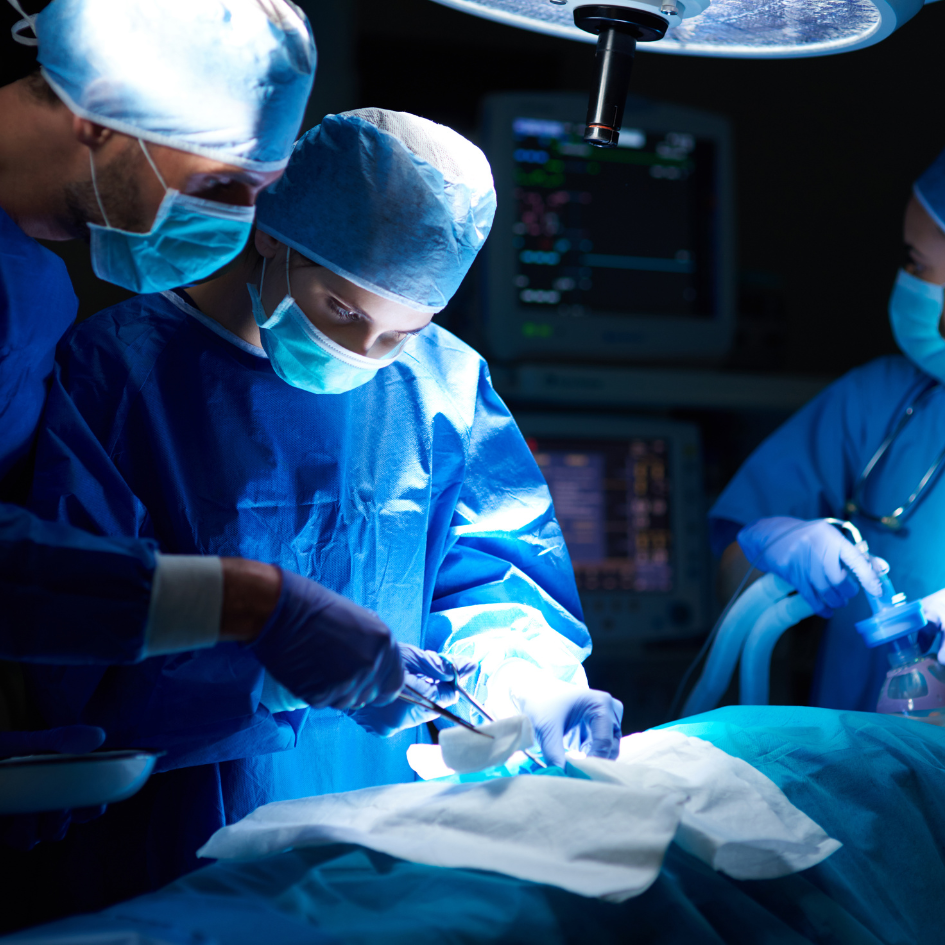
ACL reconstruction is a surgical procedure in which the damaged ACL is replaced with a graft that functions as a new stabilizing ligament.
The procedure is commonly performed using arthroscopic techniques.
The goal is to restore functional knee stability and create the conditions for progressive rehabilitation and return to appropriate activities.
ACL reconstruction does not simply “repair” the torn ligament. In many cases, the damaged ACL is replaced with a tendon graft that is positioned and fixed within the knee.
What Grafts are Used for ACL Reconstruction?
Several graft options may be considered.
These can include:
Patellar Tendon Graft
A portion of the patellar tendon is used along with attached bone segments.
Hamstring Tendon Graft
Tendons from the hamstring region are prepared and used as the graft.
Quadriceps Tendon Graft
A portion of the quadriceps tendon can be used as an ACL graft.
Other Graft Options
Graft selection depends on individual factors and the surgical situation.
How is ACL Reconstruction Performed?
The exact surgical technique is individualized according to the patient’s anatomy and injury.
01
Pre-Surgical Evaluation
The knee is assessed for stability, range of motion, associated injuries, activity requirements, and overall health.
02
Imaging & Surgical Planning
Appropriate imaging, including MRI where indicated, helps assess the ACL and associated structures.
03
Anaesthesia
The appropriate form of anaesthesia is selected according to the planned procedure and individual medical requirements.
04
Arthroscopic Assessment
A small camera is introduced into the knee to directly assess the joint and confirm the extent of the injury.
05
Graft Preparation
The selected tendon graft is prepared for reconstruction.
06
Graft Placement
Bone tunnels are created at the appropriate anatomical locations, and the graft is positioned to reproduce the functional pathway of the ACL.
07
Graft Fixation
The graft is secured using appropriate fixation devices.
08
Rehabilitation
A structured rehabilitation program begins after surgery, with progression based on healing, movement, strength, and functional recovery.
ACL Reconstruction with Meniscus or Cartilage Injury
ACL injuries may occur together with damage to other structures inside the knee.
These can include:
- Meniscus tears
- Meniscus root injuries
- Articular cartilage injuries
- Other ligament injuries
When associated injuries are present, they may influence both the surgical plan and rehabilitation.
For example, a suitable meniscus tear may be repaired during the same arthroscopic procedure as ACL reconstruction.
Explore Meniscus Repair →
Explore Meniscus Root Repair →
What are the Benefits of ACL Reconstruction?
For appropriately selected patients, ACL reconstruction may help:
- Restore functional knee stability
- Reduce episodes of giving way
- Support return to selected sports and physical activities
- Address instability associated with an ACL-deficient knee
- Allow treatment of certain associated injuries during the same surgical procedure
However, ACL reconstruction does not guarantee a specific level of athletic performance or eliminate the possibility of future knee problems.
Successful recovery depends on appropriate patient selection, surgical treatment, rehabilitation, strength, neuromuscular control, and gradual return to activity.
Recovery After ACL Reconstruction
ACL reconstruction requires a structured rehabilitation program.
Recovery generally progresses through different stages rather than following a single fixed timeline.
Early Recovery
The initial focus may include:
- Controlling pain and swelling
- Restoring knee extension
- Gradually improving knee movement
- Activating the quadriceps
- Appropriate weight-bearing as advised
Strength & Movement
As healing progresses, rehabilitation may focus on:
- Progressive strengthening
- Range of motion
- Balance
- Neuromuscular control
- Walking mechanics
- Functional exercises
Advanced Rehabilitation
Later stages may include:
- Running progression
- Agility exercises
- Jumping and landing mechanics
- Direction-change exercises
- Sport-specific training
How Long Does ACL Reconstruction Recovery Take?
ACL recovery takes considerably longer than many minor arthroscopic procedures.
A return to routine daily activities may occur much earlier than a return to running, pivoting, or competitive sport.
The timeline depends on:
- Graft healing
- Knee range of motion
- Strength recovery
- Stability
- Neuromuscular control
- Rehabilitation progress
- Associated meniscus or cartilage procedures
- Sport-specific requirements
Return to sport should be based on functional recovery rather than time alone.
When Can You Return to Sports After ACL Reconstruction?
Returning to sports requires more than simply having a healed surgical incision.
Before returning to demanding sports, factors such as:
- Full or appropriate knee range of motion
- Adequate quadriceps and hamstring strength
- Knee stability
- Balance and neuromuscular control
- Jumping and landing mechanics
- Sport-specific performance
- Absence of significant pain or swelling
- Psychological readiness and confidence
should be assessed.
The objective is a safe and well-prepared return to sport, rather than returning as quickly as possible.
What Happens If an ACL Tear is Not Reconstructed?
Some patients with ACL injuries can function successfully without reconstruction.
However, persistent instability can interfere with sports, work, and daily activities.
Repeated giving-way episodes may also place additional stress on other structures of the knee.
Whether non-surgical treatment is appropriate depends on:
- Knee stability
- Activity level
- Symptoms
- Associated injuries
- Functional goals
- Response to rehabilitation
A patient who remains stable and functions well after rehabilitation may not require reconstruction, while another patient with repeated instability may benefit from surgical evaluation.
Risks & Possible Complications
ACL reconstruction is a surgical procedure and carries potential risks.
Possible complications include:
- Infection
- Bleeding
- Blood clots
- Knee stiffness
- Persistent pain or swelling
- Reduced range of motion
- Nerve or blood-vessel injury
- Graft failure
- Recurrent instability
- Continued symptoms
- Problems related to graft fixation
- Need for additional surgery
There is also a possibility of sustaining another ACL injury or injuring the opposite knee after returning to sports.
The individual risks depend on the patient’s health, injury, surgical procedure, and rehabilitation.
Why Choose Dr. Amit Kumar Sharma?
Accurate Diagnosis. Individualized Reconstruction. Structured Rehabilitation.
ACL injuries can vary significantly from one patient to another.
A young athlete with recurrent instability, a recreational sportsperson, and a patient with a combined ACL-meniscus injury may require different treatment considerations.
Dr. Amit Kumar Sharma, Senior Consultant Orthopedic Surgeon at Apex Hospital, Palwal, Haryana, provides individualized evaluation and treatment for ACL injuries and sports-related knee conditions.
His approach focuses on:
- Detailed knee assessment
- Evaluation of knee stability
- Appropriate imaging when required
- Assessment of associated meniscus and cartilage injuries
- Individualized treatment planning
- Arthroscopic ACL reconstruction when clinically appropriate
- Consideration of appropriate graft options
- Structured post-operative rehabilitation
- Progressive return to daily activities and sports
The goal is to restore functional stability and help patients progress safely through recovery.
Looking for guidance?
Common questions answered
Is ACL reconstruction necessary for every ACL tear?
No.
Some patients can manage an ACL injury successfully without surgery. Reconstruction may be considered when persistent instability, activity demands, associated injuries, or other clinical factors make surgical treatment appropriate.
Is ACL reconstruction the same as ACL repair?
Not exactly.
ACL reconstruction generally replaces the damaged ligament with a tendon graft. ACL repair involves attempting to preserve and reattach the patient's own ligament in selected situations.
The appropriate surgical approach depends on the specific injury and clinical circumstances.
How long does ACL reconstruction surgery take?
The duration varies depending on the surgical technique and whether additional procedures, such as meniscus repair, are required.
Can ACL reconstruction be done through arthroscopy?
Yes.
ACL reconstruction is commonly performed using arthroscopic techniques, allowing the surgeon to visualize the inside of the knee through a small camera and perform the reconstruction through relatively small incisions.
Can I walk after ACL reconstruction?
Weight-bearing and walking instructions vary according to the surgical procedure, associated injuries, and individual recovery.
Some patients may begin weight-bearing relatively early, while others may require temporary restrictions or support.
Is ACL reconstruction painful?
Pain and swelling are expected after surgery.
They are generally managed with prescribed medication, appropriate activity modification, and rehabilitation.
Can an ACL tear heal on its own?
The ACL has limited healing potential, and a complete ACL tear generally does not reliably restore normal ligament structure and function on its own.
However, some patients can achieve satisfactory knee function without reconstruction through rehabilitation, particularly when the knee remains functionally stable.
When can I return to running after ACL reconstruction?
Running is introduced only after adequate healing, range of motion, strength, and neuromuscular control have been achieved.
The exact timing varies between patients and should be determined as part of the rehabilitation program.
When can I return to sports after ACL reconstruction?
Return to sports depends on functional recovery rather than a fixed date.
Strength, stability, movement quality, sport-specific performance, and other rehabilitation criteria should be considered before returning to high-demand activities.
Can ACL reconstruction and meniscus repair be done together?
Yes, when both injuries are present and both procedures are clinically appropriate, they may be treated during the same surgical procedure.
The presence of a meniscus repair can also influence the rehabilitation protocol.
Can ACL reconstruction prevent future arthritis?
ACL reconstruction is primarily performed to address functional instability. It should not be presented as a guaranteed way to prevent future knee arthritis.
Long-term knee health can be influenced by the original injury, associated meniscus or cartilage damage, subsequent injuries, alignment, activity, and other factors.
What happens if I delay ACL reconstruction?
Delaying surgery does not automatically mean that reconstruction will be unsuccessful.
For some patients, a period of rehabilitation before deciding on surgery can be appropriate. However, persistent instability or repeated giving-way episodes may increase the risk of additional knee injury.
The decision should be based on symptoms, stability, activity requirements, associated injuries, and individual circumstances.
Related Conditions
- ACL Tear
- Meniscus Tear
- Partial ACL Tear
- Meniscus Root Tear
- Complete ACL Tear
- Cartilage Injury
- Knee Instability
- Sports-Related Knee Injuries
- PCL Injury
Related Arthroscopy & Sports Medicine Procedures
Knee Arthroscopy
Minimally invasive evaluation and treatment of selected conditions affecting the knee joint.
PCL Reconstruction
Surgical reconstruction for selected PCL injuries associated with significant or persistent knee instability.
Meniscus Repair
Meniscus-preserving treatment for suitable tears where repair is clinically appropriate.
Meniscus Root Repair
Specialized treatment for selected tears involving the attachment of the meniscus to the bone.
Shoulder Arthroscopy
Minimally invasive treatment for selected shoulder joint and soft-tissue conditions.
Get Your Knee Evaluated
Persistent knee pain, swelling, locking, or instability can have different underlying causes. An accurate diagnosis is the first step toward choosing the right treatment.
If your knee symptoms are affecting walking, exercise, work, or sports, consult an orthopaedic specialist to understand whether conservative treatment or arthroscopic surgery is appropriate for you.
Book an Appointment with Dr. Amit Kumar Sharma at Apex Hospital, Palwal, Haryana, for evaluation of knee injuries and arthroscopic treatment.
Dr. Amit Kumar Sharma
Senior Consultant Orthopedic Surgeon
Apex Hospital, Palwal, Haryana